









Remember when “Just Google it” was the solution to all your search needs? Unfortunately, those days are changing fast.
While Google remains the king of search, the ground beneath its feet is shifting as brands, marketers, and end users are noticing that there are some new sheriffs in town.
The search ecosystem that puts all your eggs in the Google basket might not be a wise move anymore.
Today’s search landscape isn’t just about algorithm updates and being visible on Google. It’s about recognizing that your audience exists across multiple touchpoints from traditional search engines, i.e., from Bing and Google to AI chatbots, from social platforms to specialized marketplaces like Amazon, etc.
The businesses that thrive won’t be the ones waiting to see what happens; they will be the pioneers already establishing a strong presence across this expanding universe of search.
StatCounter shows Google’s global search share dropped below 90% and remained there throughout the last quarter of 2024, marking the first such decline in nearly a decade.
This shift coincides with significant legal headwinds.
In 2025, Google faces multiple antitrust challenges, with a judge recently finding that Google has a monopoly in search and has acted to maintain it.
These legal troubles might cause Google to change its business practices and may have an impact on its market dominance, allowing other social and AI platforms to capture more of Google’s market share.
This does not mean that Google is going down; it just signifies that Google is no longer the only game in town, and therefore relying on Google only could be increasingly risky.
For example, if you’re an ecommerce retailer that generates 60-80% of your traffic from Google and your site experiences a temporary drop in visibility during a core update for creating AI content, you would be in big trouble.
If your marketing strategy does not have any alternative traffic sources, your revenue could potentially decrease by 40% or more in a matter of weeks.
Meanwhile, if your competitors have diversified their digital presence across multiple platforms, including AI shopping assistants and social commerce channels, they might experience only minor fluctuations in their traffic and sales.
For example, a user might ask ChatGPT for information on sustainable materials, browse Instagram for some home design inspiration, check Amazon for product comparisons, and then Google specific brands before making a purchase.
This changing customer journey means that businesses must be acutely aware of where their traffic originates and how much traffic comes from various sources.
The days of relying on and checking only your Google Analytics for Google traffic are over.
In order to succeed, you must have a holistic view of your visibility across the entire digital landscape.
For example, my friend Claudia has an outdated kitchen and is looking to get a new one after 20 years of living in her home with her family.
Here is what Claudia’s journey looked like in this new ecosystem:
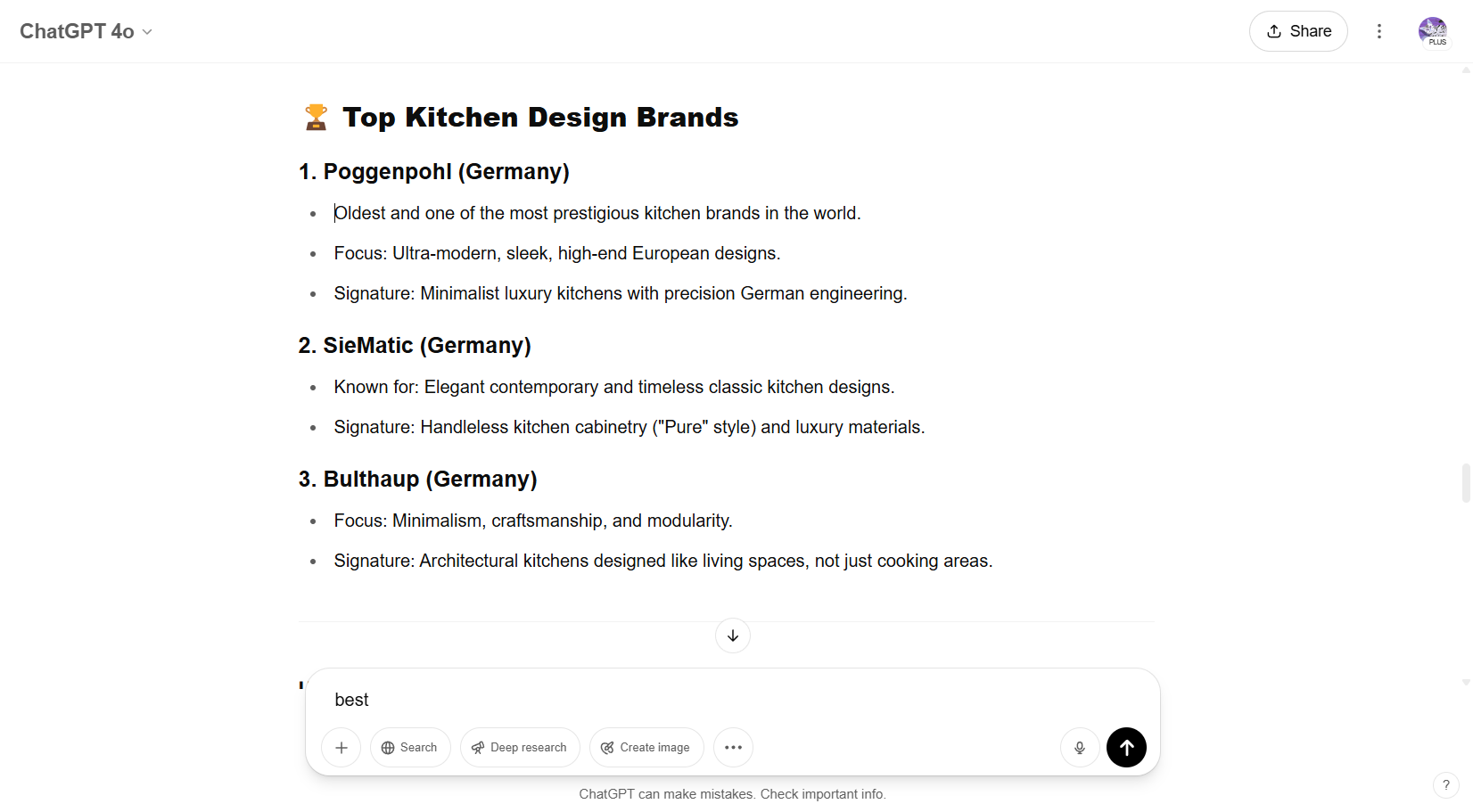 Screenshot from ChatGPT, April 2025
Now, if you’re a business that is only focused on Google, guess what? You would not gain Claudia and other clients because you would miss multiple touchpoints in their user journey, as she searched on different channels and platforms. You must have content that enforces your brand at every stage.
Imagine if the following scenarios were to occur; what would happen to your business?
Source: https://www.searchenginejournal.com...le-its-time-to-focus-on-being-visible/545453/
While Google remains the king of search, the ground beneath its feet is shifting as brands, marketers, and end users are noticing that there are some new sheriffs in town.
The search ecosystem that puts all your eggs in the Google basket might not be a wise move anymore.
Today’s search landscape isn’t just about algorithm updates and being visible on Google. It’s about recognizing that your audience exists across multiple touchpoints from traditional search engines, i.e., from Bing and Google to AI chatbots, from social platforms to specialized marketplaces like Amazon, etc.
The businesses that thrive won’t be the ones waiting to see what happens; they will be the pioneers already establishing a strong presence across this expanding universe of search.
Google Still Dominates, But It Is Being Challenged
Google is facing some competition.StatCounter shows Google’s global search share dropped below 90% and remained there throughout the last quarter of 2024, marking the first such decline in nearly a decade.
This shift coincides with significant legal headwinds.
In 2025, Google faces multiple antitrust challenges, with a judge recently finding that Google has a monopoly in search and has acted to maintain it.
These legal troubles might cause Google to change its business practices and may have an impact on its market dominance, allowing other social and AI platforms to capture more of Google’s market share.
This does not mean that Google is going down; it just signifies that Google is no longer the only game in town, and therefore relying on Google only could be increasingly risky.
For example, if you’re an ecommerce retailer that generates 60-80% of your traffic from Google and your site experiences a temporary drop in visibility during a core update for creating AI content, you would be in big trouble.
If your marketing strategy does not have any alternative traffic sources, your revenue could potentially decrease by 40% or more in a matter of weeks.
Meanwhile, if your competitors have diversified their digital presence across multiple platforms, including AI shopping assistants and social commerce channels, they might experience only minor fluctuations in their traffic and sales.
It’s An Omnichannel World
Your audience does not think in terms of platforms; they think in terms of their needs.For example, a user might ask ChatGPT for information on sustainable materials, browse Instagram for some home design inspiration, check Amazon for product comparisons, and then Google specific brands before making a purchase.
This changing customer journey means that businesses must be acutely aware of where their traffic originates and how much traffic comes from various sources.
The days of relying on and checking only your Google Analytics for Google traffic are over.
In order to succeed, you must have a holistic view of your visibility across the entire digital landscape.
For example, my friend Claudia has an outdated kitchen and is looking to get a new one after 20 years of living in her home with her family.
Here is what Claudia’s journey looked like in this new ecosystem:
- Claudia started out by going to ChatGPT and typing in “best kitchen design brands,” and found some information mentioning several designer brands.
- Since the intent behind kitchen design is image-based, Claudia then searches on Pinterest for visual inspiration, and saves some images from the designer brands that she found in ChatGPT.
- Claudia then looks to Reddit to gather feedback about specific brands and learn from others’ experiences.
- She checks YouTube for installation tutorials but decides she needs a professional.
- Claudia then Googles local contractors with high ratings and reviews, contacts one of them, and gets a quote.
Screenshot from ChatGPT, April 2025Now, if you’re a business that is only focused on Google, guess what? You would not gain Claudia and other clients because you would miss multiple touchpoints in their user journey, as she searched on different channels and platforms. You must have content that enforces your brand at every stage.
Don’t Fall Behind
The time is now to adopt an omnichannel strategy, stay ahead of trends, experiment with different platforms, and maintain a strong performance on established channels like Google so we won’t be left behind.Imagine if the following scenarios were to occur; what would happen to your business?
- A loss of 30% of your traffic overnight.
- You’re not finding where your customers are spending time before they make purchase decisions.
- You’re not visible on ChatGPT, Bing, YouTube, Reddit, etc.
Source: https://www.searchenginejournal.com...le-its-time-to-focus-on-being-visible/545453/